


Page 21 - IMDR Journal 2025
P. 21
Research Article
            surge from ₹33,124 Cr to ₹37,290 Cr, along with an increase   benefited  from  strong  financial  recoveries  and  robust
            in PAT from ₹3,384 Cr to ₹3,967 Cr.In 2018, Asian Paints   efficiency improvements, IT firms like Wipro and Bosch
            incorporated automation to improve production processes.   have  mostly  enjoyed  process  improvements  without
            This change secured a rise in revenue from ₹16,209 Cr to   dramatic sales growth.
            ₹30,727 Cr, with profit after tax increasing from ₹2,132 Cr
                                                              Nestlé and Asian Paints, as consumer goods manufacturers,
            to ₹5,321 Cr.Nestlé India integrated digital manufacturing   have used AI technologies for demand forecasting, IoT for
            in 2019, greatly enhancing operational efficiency. Revenue   inventory control, and digital tools for tracking across the
            surged from ₹12,295 Cr to ₹24,275 Cr, while profit after tax   supply chain to enhance visibility and production efficiency,
            grew from ₹1,968 Cr to ₹3,932 Cr.  Hindalco utilized data-  resulting in lead time shrinkage, lower logistics costs, and
            driven  production  planning  in  2020,  leading  to  revenue   enhanced  responsiveness  to  market  demands,  ultimately
            growth from ₹45,207 Cr to ₹82,616 Cr and an increase in   solidifying their market position.
            profit from ₹1,205 Cr to ₹3,697 Cr.
                                                              Hypothesis Testing
            Financial Trends Summary
                                                              The  hypothesis  is  supported  by  an  analysis  of  various
            The introduction of Industry 4.0 technologies has resulted in
            significant  revenue  boosts  for  businesses  in  various   companies  from  different  sectors.  Among  the  chosen
            industries,  especially  those  heavily  focused  on   sample,  many  manufacturing  companies,  including  Tata
            manufacturing. Organizations like Tata Motors, Hindalco,   Motors,  CEAT,  and  Vedanta,  showcased  significant  cost
            and Vedanta have witnessed considerable financial growth   advantages  following  the  implementation  of  IoT.  These
            by  utilizing  smart  manufacturing,  automation,  and  data-  companies noted increases in revenue and enhancements in
            informed decision-making. The adoption of IoT, AI, and   operational efficiency, suggesting that IoT adoption played a
            advanced  analytics  has  enhanced  production  processes,   key role in optimizing production, minimizing waste, and
            decreased downtime, and improved product quality, thereby   improving decision-making processes.
            increasing customer satisfaction and driving higher sales.  In contrast, some firms like Hindalco faced a rise in costs
                                                              initially due to the substantial investments needed for IoT
                                                              integration. Furthermore, IT firms such as Wipro and Bosch
                                                              exhibited improvements in processes but did not see direct
                                                              financial returns. As a result, the hypothesis H1, asserting
                                                              that the adoption of IoT leads to results in changes to costs
                                                              and  improvements  in  operational  methods,  is  validated,
                                                              whereas H0, which claims that IoT implementation does not
                                                              cause any significant changes in costs, is disproven due to
                                                              the  evident  financial  and  operational  advantages  seen  in
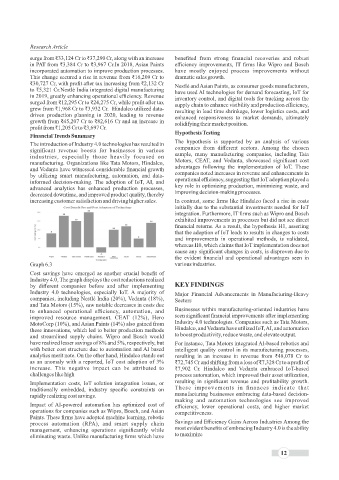
            Graph 6.3                                         various industries.
            Cost  savings  have  emerged  as  another  crucial  benefit  of
            Industry 4.0, The graph displays the cost reductions realized
            by  different  companies  before  and  after  implementing   KEY FINDINGS
            Industry  4.0  technologies,  especially  IoT.  A  majority  of   Major  Financial Advancements  in  Manufacturing-Heavy
            companies, including Nestlé India (20%), Vedanta (18%),   Sectors
            and Tata Motors (15%), saw notable decreases in costs due
            to  enhanced  operational  efficiency,  automation,  and   Businesses within manufacturing-oriented industries have
            improved  resource  management.  CEAT  (12%),  Hero   seen significant financial improvements after implementing
            MotoCorp (10%), and Asian Paints (14%) also gained from   Industry 4.0 technologies. Companies such as Tata Motors,
            these innovations, which led to better production methods   Hindalco, and Vedanta have utilized IoT, AI, and automation
            and  streamlined  supply  chains.  Wipro  and  Bosch  would   to boost productivity, reduce waste, and elevate output.
            have realized lesser savings of 8% and 5%, respectively, but   For instance, Tata Motors integrated AI-based robotics and
            with better cost structure due to automation and AI based   intelligent quality control in its manufacturing processes,
            analytics merit note. On the other hand, Hindalco stands out   resulting  in  an  increase  in  revenue  from  ₹48,078  Cr  to
            as an anomaly with a reported, IoT cost adoption of 3%   ₹72,745 Cr and shifting from a loss of ₹7,328 Cr to a profit of
            increase.  This  negative  impact  can  be  attributed  to   ₹7,902  Cr.  Hindalco  and  Vedanta  embraced  IoT-based
            challenges like high                              process automation, which improved their asset utilization,
            Implementation  costs,  IoT  solution  integration  issues,  or   resulting  in  significant  revenue  and  profitability  growth.
            traditionally  embedded,  industry  specific  constraints  on   These  improvements  in  finances  indicate  that
            rapidly realizing cost savings.                   manufacturing businesses embracing data-based decision-
                                                              making  and  automation  technologies  see  improved
            Impact  of AI-powered  automation  has  optimized  cost  of   efficiency,  lower  operational  costs,  and  higher  market
            operations for companies such as Wipro, Bosch, and Asian   competitiveness.
            Paints. These firms have adopted machine learning, robotic
            process  automation  (RPA),  and  smart  supply  chain   Savings and Efficiency Gains Across Industries Among the
            management,  enhancing  operations  significantly  while   most evident benefits of embracing Industry 4.0 is the ability
            eliminating waste. Unlike manufacturing firms which have   to maximize


                                                                                                    12

